 By the NAXTECH team · Published 13 Jul 2026 · Updated 14 Oct 2026 · Hands-on with v2.0
It is late, you have felt flat for weeks, and you type "am I depressed" into a search box — then close the tab because the results feel like either a quiz for clicks or a diagnosis you did not ask for. That gap, between an idle online quiz and sitting in a clinic, is where most people get stuck. Depression Test PHQ-9 was built to fill it with something calmer and genuinely useful.
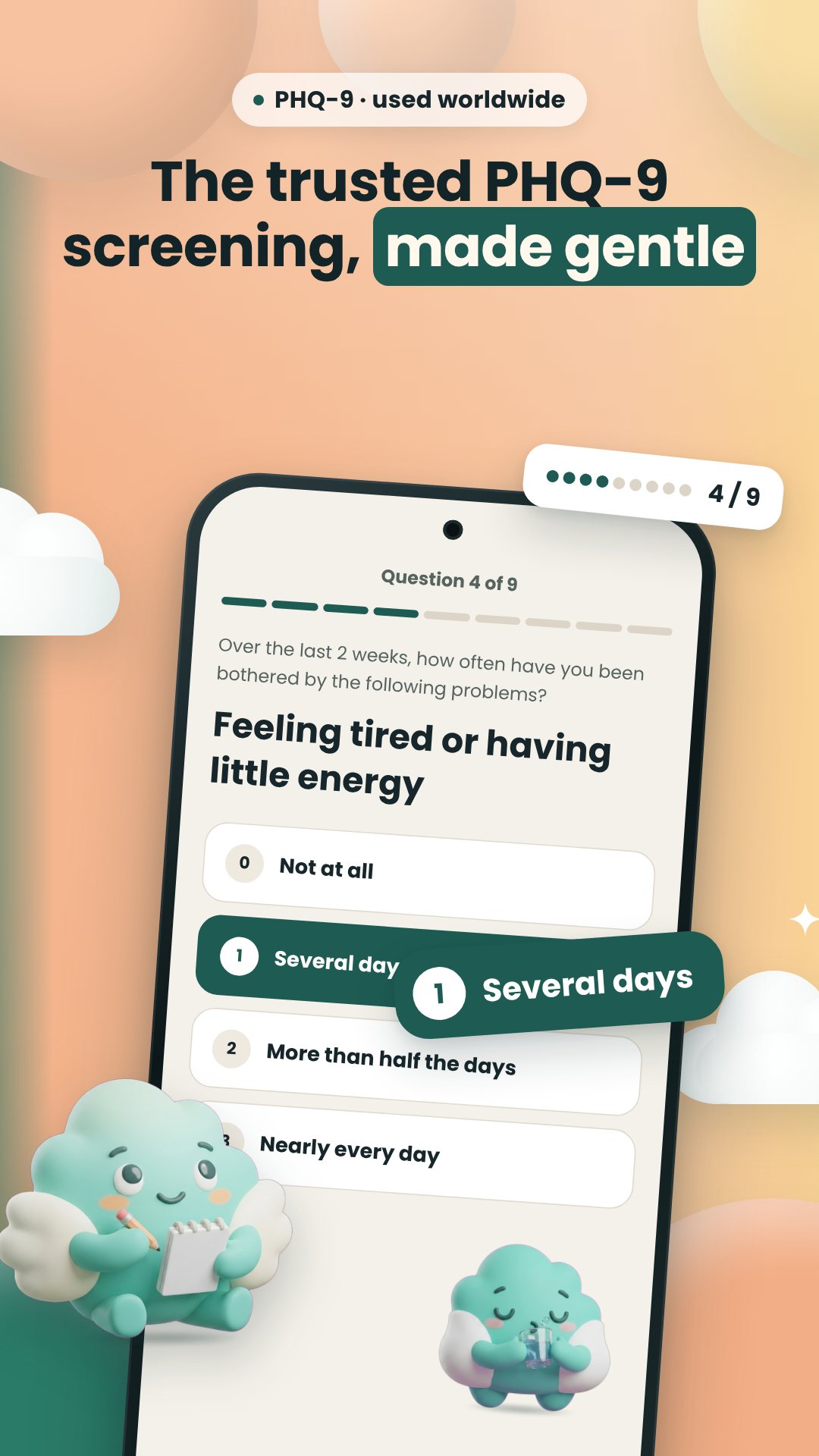
At its heart is the PHQ-9, the nine-question depression screening used in clinics worldwide. You answer how often, over the last two weeks, you have been bothered by things like low interest, poor sleep or trouble concentrating — nine questions, about three minutes — and the app scores it from 0 to 27 and places you in a severity band. Nothing leaves your phone.
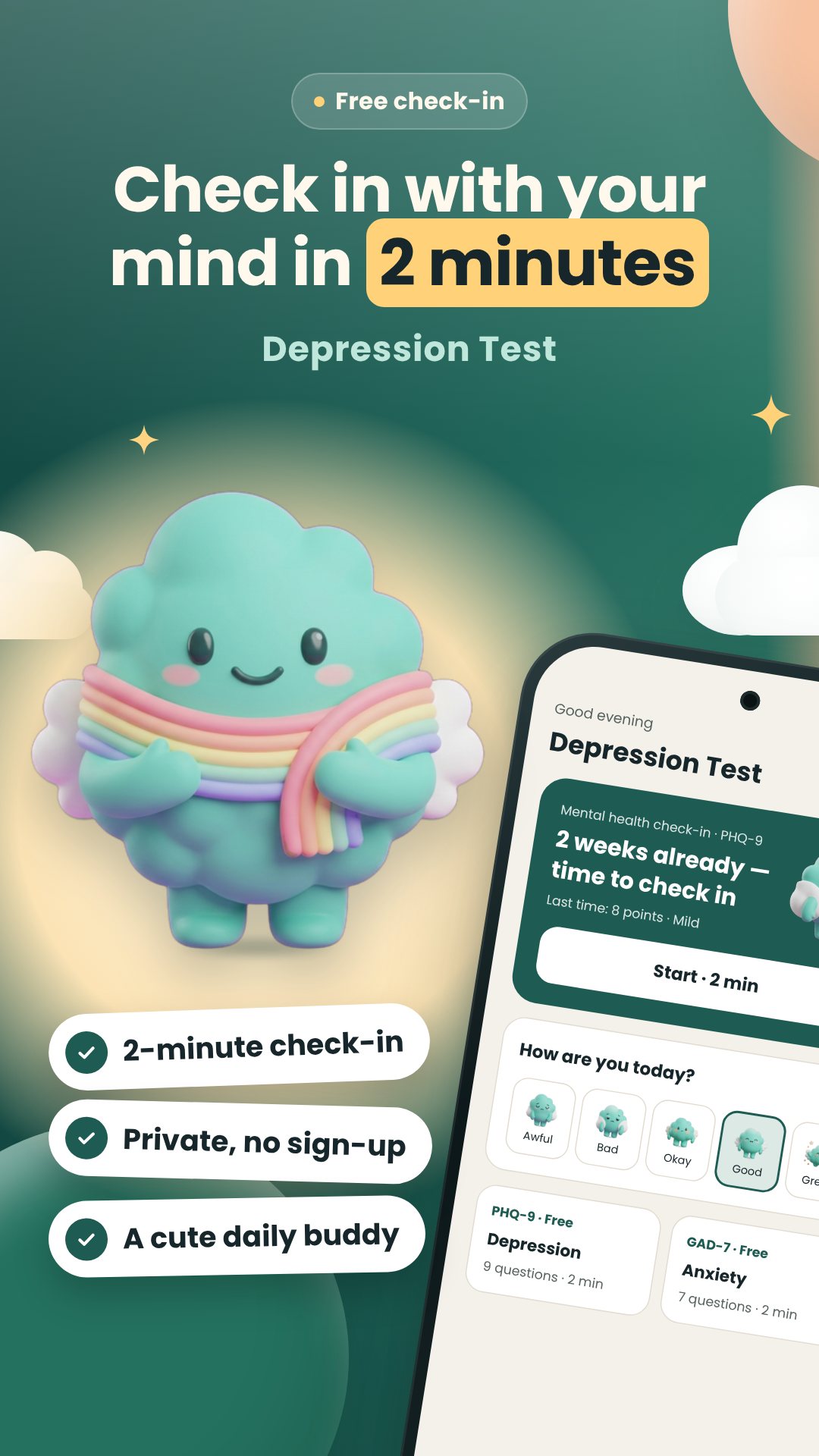
Low mood rarely travels alone, so the app carries three validated check-ins. The PHQ-9 covers depression; the GAD-7 (seven questions) covers anxiety; and the ST-5, a five-item stress scale from Thailand's Department of Mental Health, gives a quick read on stress. Finish one and the app may gently suggest a companion check — after a high anxiety score, for example, it offers the PHQ-9 as "two more minutes" rather than a demand.
Most of the time the result card is matter-of-fact: your score, your band, how it compares to last time, and one or two small things to try today. But the app watches two things closely. If your PHQ-9 score reaches 20 or above, or if you mark any frequency on the ninth question — the one about thoughts of self-harm — the result switches to a quieter layout. The ads and any celebration disappear, and crisis helplines come first, with one-tap dialing for 17 countries. It is a small design choice that matters at exactly the wrong moment to see a confetti animation.
A screening is a snapshot; the rest of the app is for the days in between. A one-tap mood diary builds the trend chart and a weekly recap, so you can see whether things are drifting up or down instead of guessing. For harder moments there is guided 4-7-8 and box breathing, a bedtime wind-down, an SOS screen, and a Stanley-Brown style safety plan with six sections you fill in for yourself — warning signs, coping steps, safe places, people to call, reasons to keep going, and making your space safer.
If you want structure, three 14-day programs — Get moving, Untangle thoughts and Sleep better — walk you through small daily actions, with the first three days free. And when you need to show someone, the app builds an A4 "for my doctor" PDF of your history, entirely offline, so you walk into an appointment with the picture already drawn.
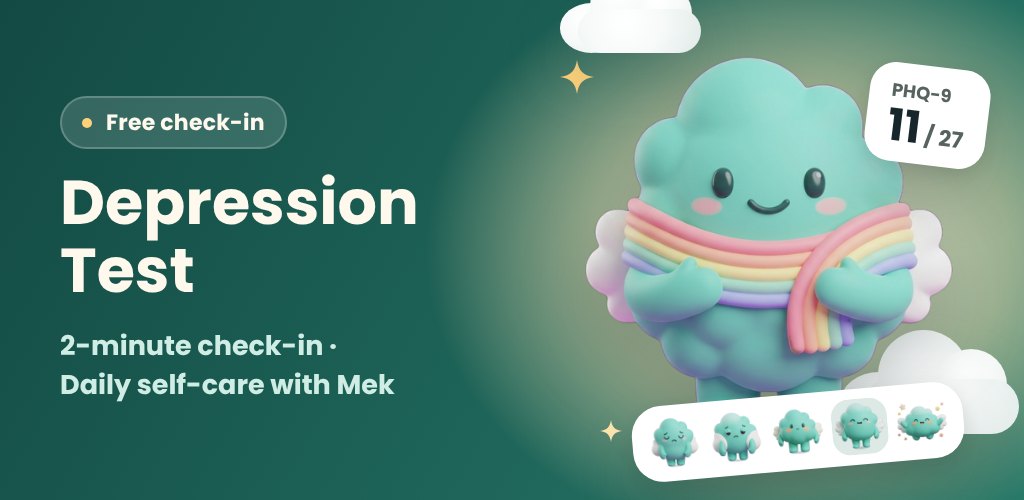
Checking in on your own mental health is the kind of habit that quietly lapses. The app gives you Mek, a small cloud companion you look after by showing up — logging a mood, breathing, finishing a lesson. There is a room to decorate, outfits, little trips and seasonal moments, and if you have been away for a few days Mek welcomes you back with no guilt. It is a soft reason to return, nothing more.
Everything is stored on your device — no account, no cloud sync — and the core screenings work with no connection. You can lock the app behind a PIN or your fingerprint, back up and restore your data yourself, and set a reminder to re-check (the app suggests every 14 days for the PHQ-9, weekly for the ST-5). The interface is translated into 19 languages. It asks only for notification and vibration access for reminders — no camera, location or contacts.
Depression Test PHQ-9 is a screening and self-tracking tool, not a diagnosis, and it does not replace care from a qualified professional — the PHQ-9, GAD-7 and ST-5 are questionnaires that help you and a clinician talk. If you are in crisis, use the in-app helplines or your local emergency number. The app is free with ads, with an optional Plus upgrade that unlocks the full programs and removes ads.
No. It runs the validated PHQ-9 screening to give you a score and severity band, but only a qualified professional can diagnose depression.
Yes. Your answers, moods and history are stored on your device with no account or cloud sync, and you can lock the app with a PIN or fingerprint.
If your score reaches 20 or you flag any thought of self-harm, the result hides ads and celebrations and shows crisis helplines first, with one-tap dialing for 17 countries.
Yes, it is free to download with ads, and offers an optional Plus upgrade for the full guided programs and an ad-free experience.