 By the NAXTECH team · Published 28 May 2026 · Updated 30 Aug 2026 · Hands-on with v1.0
It is Monday morning, you are mapping out next quarter, and the one question nobody can answer from a plain phone calendar is: which of these dates are actually off, and where can one day of leave buy a four-day weekend? On top of that, your grandmother wants to know the weton for a wedding, and you are trying to keep your Monday-Thursday fasts. A generic calendar app knows none of this. Kalender Indonesia was built around exactly these Indonesian questions.
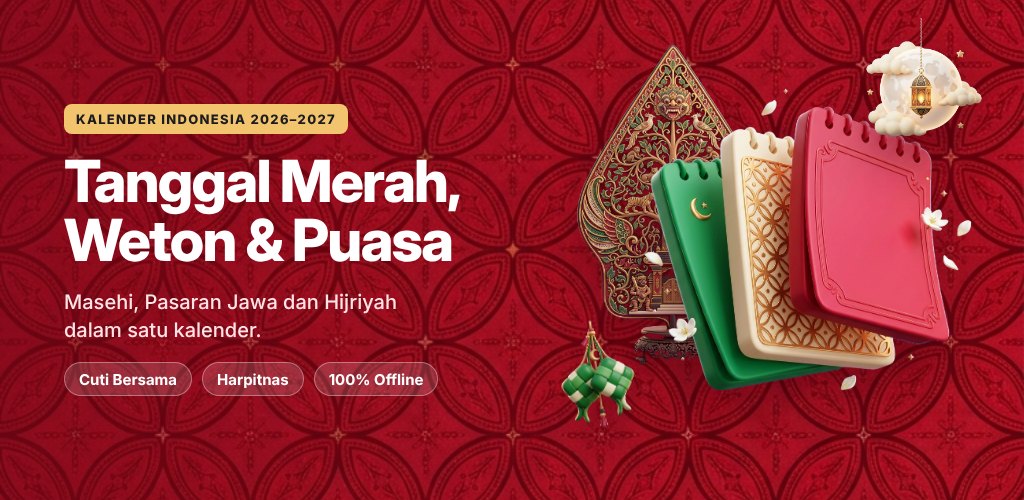
At its heart the app shows three calendars at once. Every day carries its Masehi (Gregorian) date, its Javanese pasaran — Legi, Pahing, Pon, Wage or Kliwon — and its Hijri date, so you never have to cross-reference three sources. National holidays appear in red, and the whole thing runs on your device with no connection required.
The Holidays tab lists every Tanggal Merah and Cuti Bersama for 2026 and 2027, taken from the SKB 3 Menteri (the joint decree of the Religious Affairs, Manpower and Administrative Reform ministries). Each entry shows its date and name — Idul Fitri 1447 H, Nyepi, Waisak, Independence Day, Natal and the rest — and marks collective-leave days separately from fixed public holidays. Because the Islamic dates can still be moved by the Kemenag isbat, 2027 is flagged as "subject to change" rather than presented as final.
This is where the app earns its keep. The Harpitnas tool scans the year for the "sandwiched" working days — a holiday that lands on a Thursday turns the Friday into a bridge day, a holiday on a Tuesday does the same for the Monday — and shows you the exact four consecutive days off you win by taking a single day of leave. Alongside it, Hari Baik ranks the five highest-neptu days in the next 30 days, the kind of dates the Javanese tradition favours for important events. Both live in the app's VIP section, which you unlock by watching a rewarded ad.
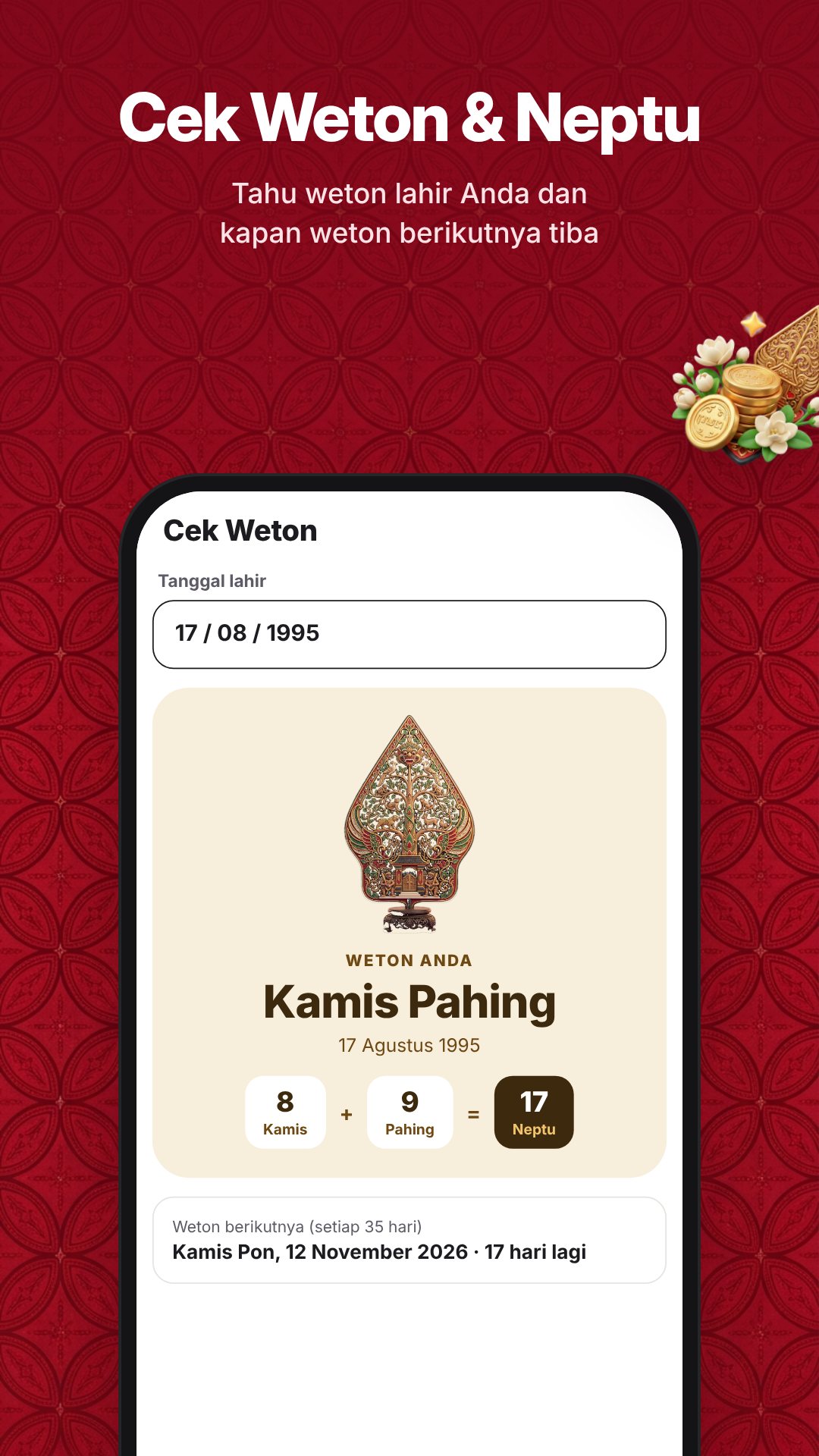
Pick any birth date and the Weton screen gives you the Javanese day-and-pasaran pairing and its neptu — the sum of the day value and the pasaran value (Legi 5, Pahing 9, Pon 7, Wage 4, Kliwon 8) — then counts down to the next time that same weton returns in the 35-day cycle. The Weton Jodoh tool takes two birth dates and applies the classic primbon formula, (neptu A + neptu B) mod 8, to land on one of the eight outcomes — Pesthi, Ratu, Jodoh, Topo, Tinari, Padu, Sujanan or Pegat — each with a short reading.
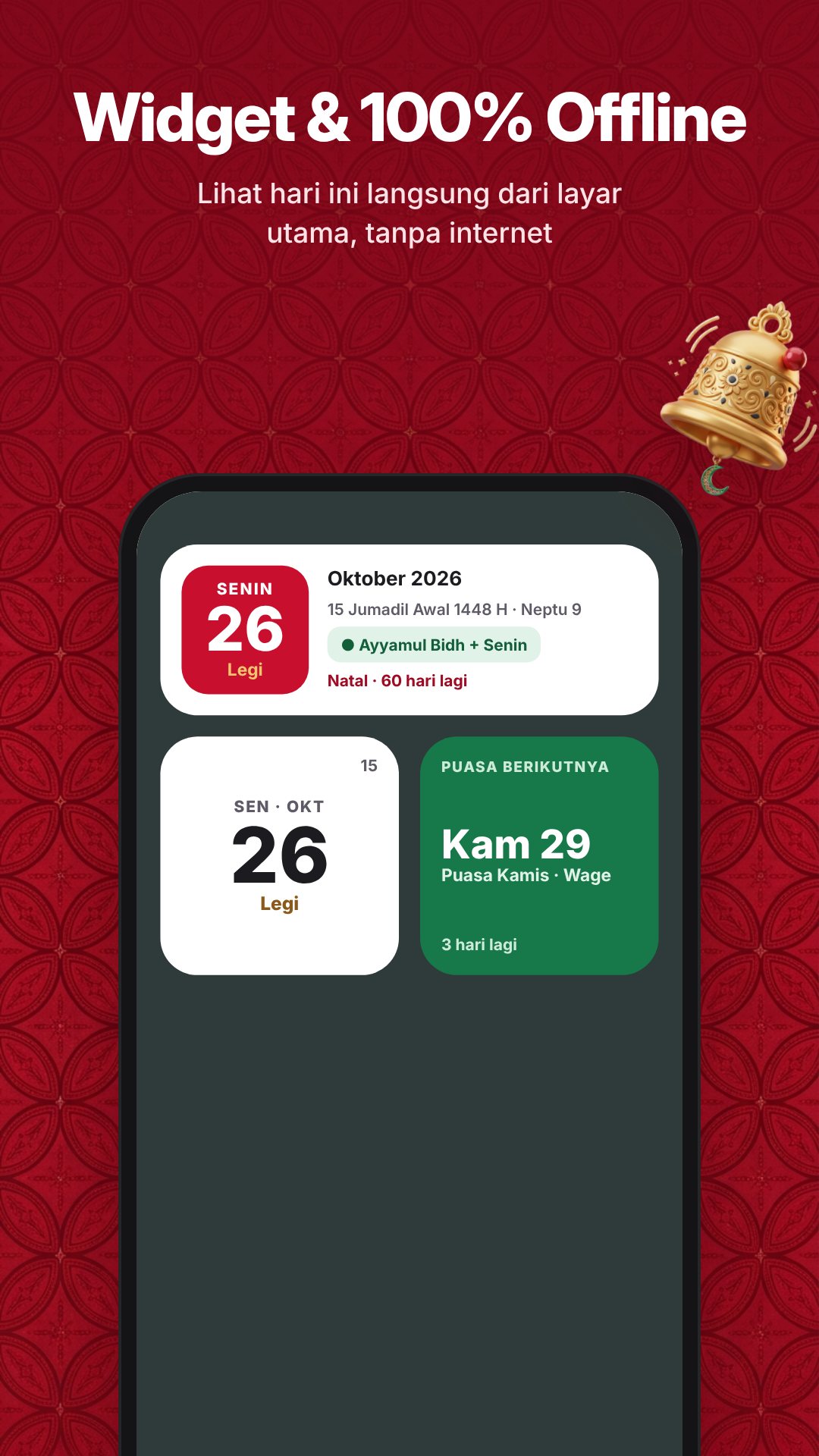
The Puasa tab lists upcoming Senin-Kamis (Monday and Thursday) fasts and Ayyamul Bidh (the 13th, 14th and 15th of each Hijri month), with a filter to show just one kind. Set a reminder time and the app schedules a local notification for each fasting day — and because it registers for boot events, those reminders come back after you restart the phone. A Hijri offset of −1, 0 or +1 lets you line the calendar up with the Kemenag announcement for your region.
Kalender Indonesia works fully offline; only the ads need a connection, and if an ad cannot load the VIP section still opens so the app never dead-ends. Holiday dates follow the official SKB, but Islamic dates depend on the Kemenag isbat and may shift — treat the 2027 list as provisional. Weton and primbon readings are offered for cultural and reference use.
Yes. The calendar, holidays, weton and fasting features all run on your device; only the ads need a connection.
Tanggal Merah and Cuti Bersama for 2026 and 2027, from the SKB 3 Menteri, with 2027 marked as subject to change.
It pairs the weekday with the Javanese pasaran to find the neptu, and for compatibility applies the primbon formula (neptu A + neptu B) mod 8 to give one of eight outcomes.
Yes, it is free with ads, and the Harpitnas and Hari Baik tools unlock after a short rewarded ad.