 글 NAXTECH 팀 · 2026년 9월 11일 발행 · 2026년 11월 2일 업데이트 · v1.0 직접 사용기
자동차 보험에서 마일리지 특약 할인을 받았다면, 1년 뒤 보험사는 계기판 사진 한 장을 요구합니다. 약정한 거리보다 덜 타면 환급금이 커지고, 넘기면 줄어듭니다. 그런데 정작 1년 중간에 "지금 내가 기준선에 얼마나 가까운가"를 알려 주는 곳은 없죠. 키로수콘은 바로 그 질문 하나에, 계기판 사진 한 장으로 답하려고 만든 앱입니다.
키로수콘은 계기판 스캔을 중심에 둔 주행거리 앱입니다. 카메라를 계기판에 대면 기기 안에서 글자 인식(OCR)이 총 주행거리(ODO) 숫자를 바로 읽어 냅니다. 그 숫자 하나로 마일리지 특약 환급금을 관리하고, 국세청 업무용승용차 운행기록부를 만들어 내보낼 수 있습니다. 모든 계산은 휴대폰 안에서 돌아가고, 계정도 위치 권한도 필요하지 않습니다.
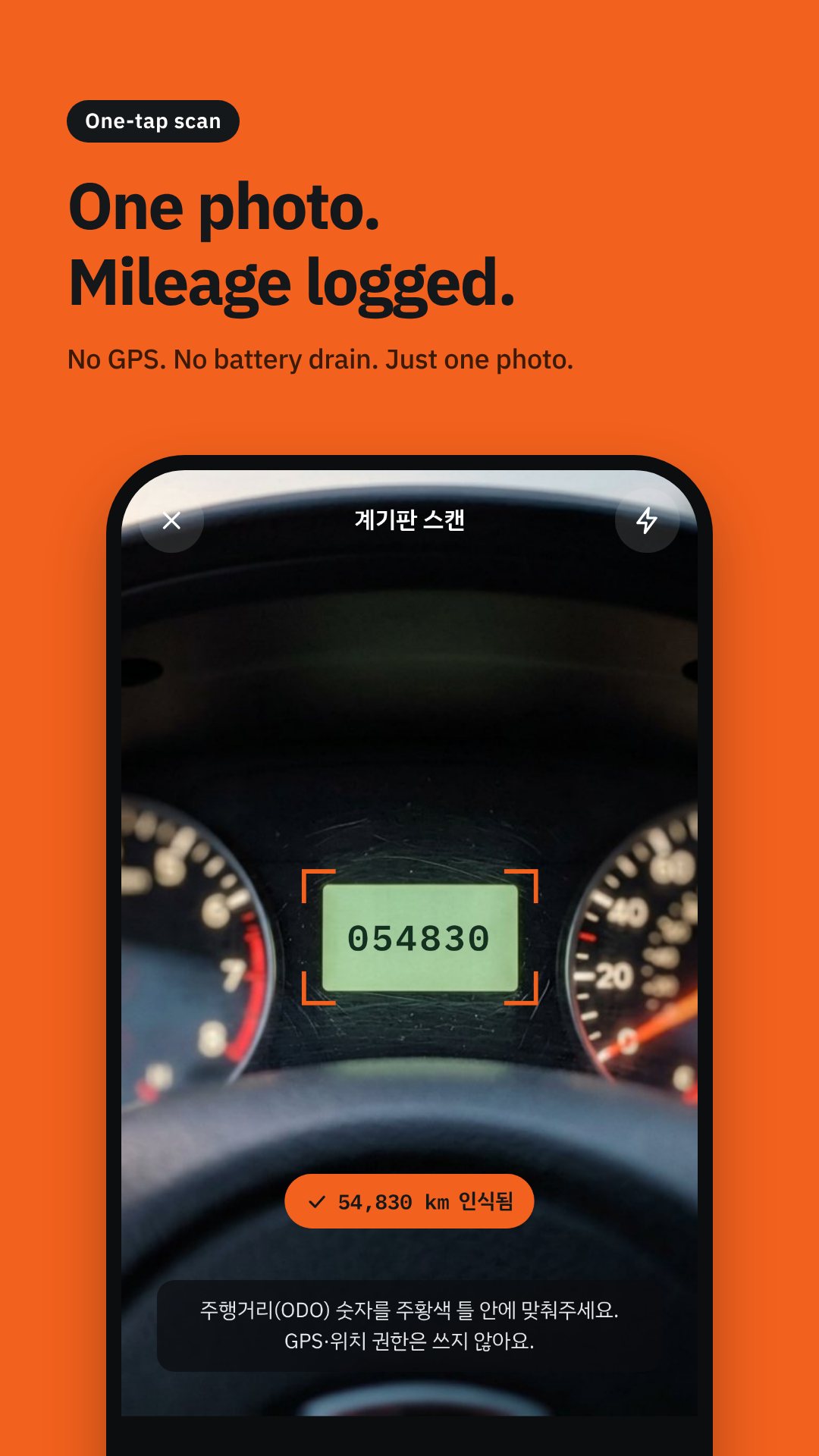
계기판 사진에는 ODO 말고도 숫자가 많습니다 — 속도계 눈금(20, 40 … 220), 시계 08:12, 트립 12.4, 수온계까지요. 키로수콘의 판독기는 이런 숫자를 일부러 걸러 냅니다. 소수점이나 콜론이 붙은 숫자는 버리고, 숫자 덩어리 안에서 생기는 인식 오류는 조용히 바로잡습니다 — O는 0, I·l는 1, S는 5, B는 8로요. 3~7자리 후보만 남기고, 54,830처럼 천 단위 쉼표도 허용합니다. 직전 기록을 알고 있으면 그보다 크면서 가장 가까운 값을, 상식적인 범위(5만 km 이내)에서 고릅니다. 모든 후보가 직전보다 작으면 틀린 값을 몰래 저장하지 않고 확인을 요청합니다. 글자 인식은 구글 ML Kit가 기기 안에서 처리하므로 사진이 휴대폰 밖으로 나가지 않고, 인식이 지저분하거나 카메라를 쓰기 어려울 땐 직접 숫자를 입력할 수 있습니다.
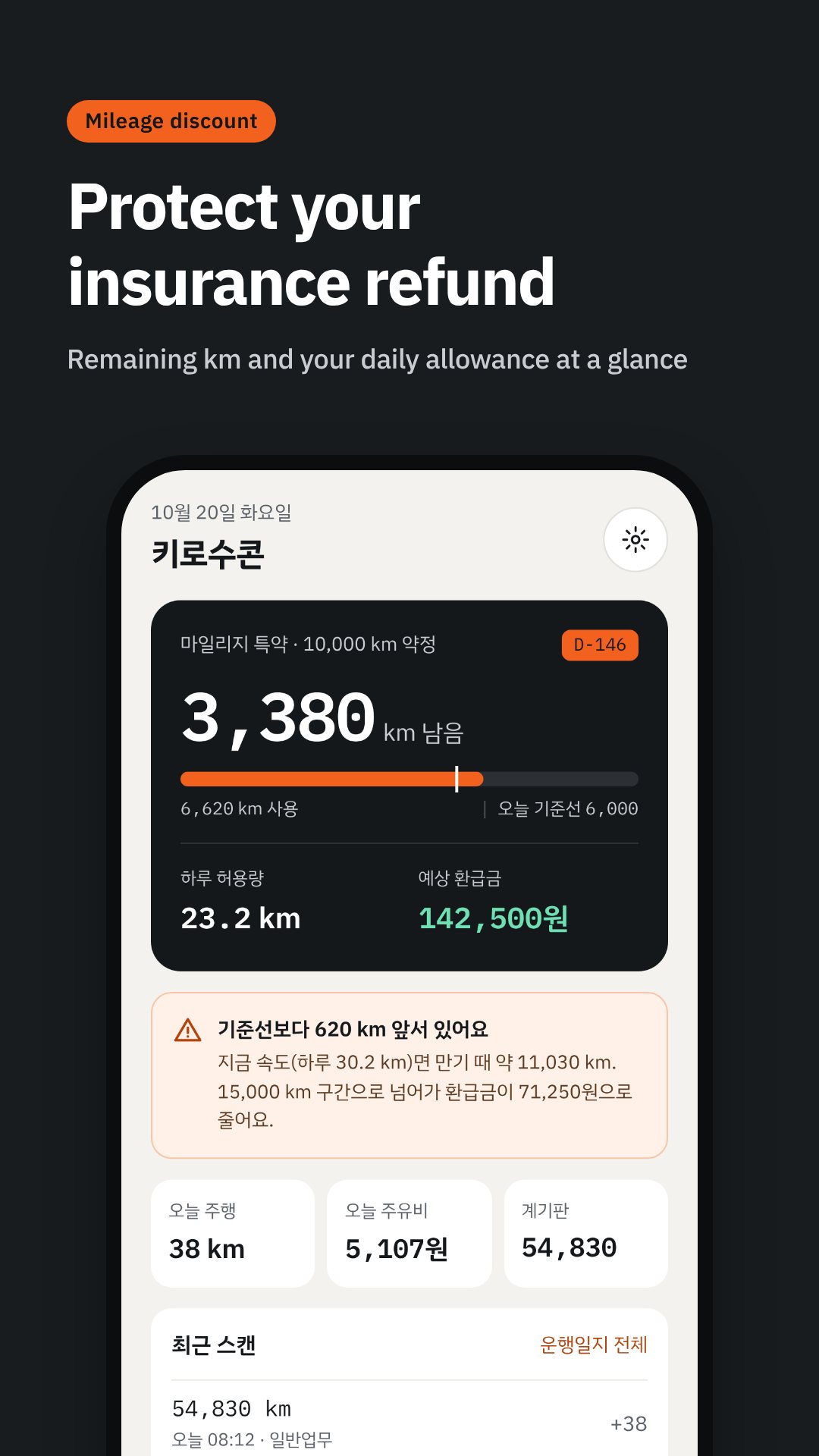
보험 시작일, 보험료, 약정 거리를 입력하세요. 키로수콘은 흔히 쓰는 3,000 / 5,000 / 10,000 / 15,000 km 구간을 제공합니다. 그러면 홈 화면에 사용·잔여 거리와 함께 기준선이 보입니다 — 약정 거리를 1년에 고르게 나눠 탔다면 오늘까지 타도 되는 거리죠. 기준선보다 덜 탔으면 '잘 가고 있어요', 더 탔으면 '앞서 있어요'로 알려 줍니다. 지금 하루 평균 속도로 1년을 채웠을 때의 연간 거리를 예상해 주고, 남은 기간 하루에 탈 수 있는 거리, 만기까지의 D-day, 그리고 약정 기준·예상 기준 환급금을 각각 계산합니다. 환급률 표는 대형 손해보험사 4곳(삼성화재·현대해상·DB·KB)의 공개 구간을 평균 낸 추정치라서, 모든 화면에 '추정'이라고 분명히 표시합니다.
운행마다 출퇴근, 일반업무, 개인으로 목적을 지정하면, 키로수콘이 과세기간의 국세청 업무용승용차 운행기록부를 만들어 줍니다 — 출퇴근용·일반업무용 거리를 나눈 열과 맨 아래 업무사용비율까지, 서식의 9개 항목 그대로요. 개인 주행거리는 업무사용비율에서 빠지고, 보험 시작 후 처음 찍은 누적 거리는 보험 환급 계산에는 넣되 운행기록부에서는 제외합니다. 완성한 기록부는 엑셀(.xlsx) 또는 PDF로 내보내 세무 담당자에게 바로 보낼 수 있습니다.
글자 인식은 카메라와 계기판 조명에 영향을 받습니다. 정면에서 또렷하게 찍을수록 잘 읽히고, 언제든 숫자를 직접 입력할 수 있습니다. 환급률은 보험사 공개 구간을 평균 낸 추정치이지 견적이 아니므로, 실제 금액은 가입한 보험사에서 확인하세요. 키로수콘은 주행 기록을 휴대폰 안에만 저장하며, 네트워크는 광고와 '광고 제거' 결제에만 사용합니다.
네. 계기판 인식, 환급 계산, 운행기록부 작성이 모두 기기 안에서 돌아가고, 기록은 휴대폰에만 저장됩니다.
계기판 스캔을 위한 카메라 하나뿐입니다. 로그인도, 전화번호도, 위치(GPS) 권한도 요구하지 않습니다.
아니요. 대형 손해보험사 4곳의 공개 구간을 평균 낸 추정치이며, 표시되는 모든 화면에 '추정'이라고 안내합니다 — 실제 금액은 보험사에 확인하세요.
네. 업무용승용차 운행기록부를 서식의 9개 항목 그대로 만들어 엑셀 또는 PDF 파일로 내보냅니다.
By the NAXTECH team · Published 26 May 2026 · Updated 3 Sept 2026 · Hands-on with v1.0
Your car insurance gave you a low-mileage discount, and in twelve months an adjuster will want a photo of your odometer to decide how much money comes back. Drive under the number you agreed to and the refund is bigger; drift over it and it shrinks — but nobody tells you, mid-year, how close to the line you actually are. Kirosucon (키로수콘) was built to answer that one question from a single photo of your dashboard.
Kirosucon is a Korean mileage app built around an odometer scan: point the camera at the dashboard, and on-device OCR reads the total-distance number straight off the cluster. From that one figure it tracks your 마일리지 특약 (mileage-discount) refund and builds the 국세청 업무용승용차 운행기록부 — the National Tax Service business-vehicle driving logbook — ready to export. Everything runs on the phone, with no account and no location access.
A dashboard photo is full of numbers that are not the odometer — the speedometer marks (20, 40 … 220), the clock at 08:12, the trip meter at 12.4, the coolant gauge. Kirosucon's parser throws those out on purpose: anything with a decimal point or a colon is rejected, and it quietly repairs the misreads OCR makes inside a run of digits — O becomes 0, I or l becomes 1, S becomes 5, B becomes 8. It keeps only 3-to-7-digit candidates, accepts a thousands comma like 54,830, and when it knows your last reading it picks the nearest value that is higher than before, within a sane 50,000 km jump. If every candidate is lower than last time, it stops and asks you to confirm instead of silently saving a wrong number. Text recognition is Google ML Kit running on the device, so nothing leaves the phone, and there is a manual keypad whenever a reading is dirty or the camera is not handy.
Set your policy start date, your premium and the mileage you contracted — Kirosucon offers the usual tiers of 3,000 / 5,000 / 10,000 / 15,000 km. The home screen then shows used and remaining distance, and a baseline: the kilometres you could have driven by today if you spread the contract evenly across the year. Drive less than the baseline and you are on track; more, and the app says you are ahead of pace. It projects your year-end distance from your current daily rate, tells you how many kilometres a day you have left, counts down the D-day to expiry, and estimates the refund for both your contract and your projected mileage. The rate table is an average of the published tiers from four big insurers — Samsung Fire, Hyundai, DB and KB — so every figure is clearly labelled an estimate, never a promise.
Tag each drive as commute (출퇴근), business (일반업무) or personal (개인), and Kirosucon assembles the NTS 업무용승용차 운행기록부 for the tax year — the exact nine columns of the form, down to separate commute and general-business distance columns and the 업무사용비율 (business-use ratio) totalled at the bottom. Personal kilometres are excluded from that ratio, and the very first cumulative reading since your policy began is kept out of the logbook while still counting toward your insurance quota. Export it as an Excel (.xlsx) or PDF file and share it straight to your accountant.
OCR depends on your camera and the lighting on the cluster; a clean, straight shot reads best, and you can always type the number in. Refund percentages are estimates drawn from published insurer tiers, not a quote — confirm the figure with your own insurer. Kirosucon stores your driving records only on your device; the only network use is ads and the optional purchase to remove them.
Yes. The odometer OCR, the refund maths and the tax-logbook build all run on your device, and your records are saved only on the phone.
Only the camera, for the odometer scan. There is no login, no phone number and no location (GPS) access.
No. They are estimates averaged from the published tiers of four major insurers, and every screen that shows them says so — check your real figure with your insurer.
Yes. Kirosucon builds the 업무용승용차 운행기록부 in its official nine-column shape and exports it as an Excel or PDF file.