 By the NAXTECH team · Published 15 Oct 2026 · Updated 24 Oct 2026 · Hands-on with v1.0
You wake before dawn from a dream so vivid it stays with you, reach for your phone, and the first result is a stranger's guesswork with an ad on top. For a tradition as careful as Arabic dream interpretation, that gap between folk guesses and the classical books is the whole problem. Ibn Sirin Dreams was built to close it.
Ibn Sirin Dreams is an offline dictionary built around the interpretations attributed to the imam Muhammad ibn Sirin, with readings drawn from classical sources such as Muntakhab al-Kalam and Ta'tir al-Anam. Every entry, search and the vision radar run on your device, so a reading at four in the morning never waits for a signal or asks you to sign in.
Arabic words bend around a three-letter root, and a plain text search misses them. Ibn Sirin Dreams normalises what you type — folding hamza and the forms of a letter, dropping the definite article — and strips prefixes and suffixes to find the root, so a conjugated verb like يأكل ("he eats") still lands on the entry for أكل. A live root badge shows the root it has guessed, suggestions appear under the box, and you can search in English too. When nothing matches exactly, it falls back to keyword and partial matches so you rarely hit a dead end.
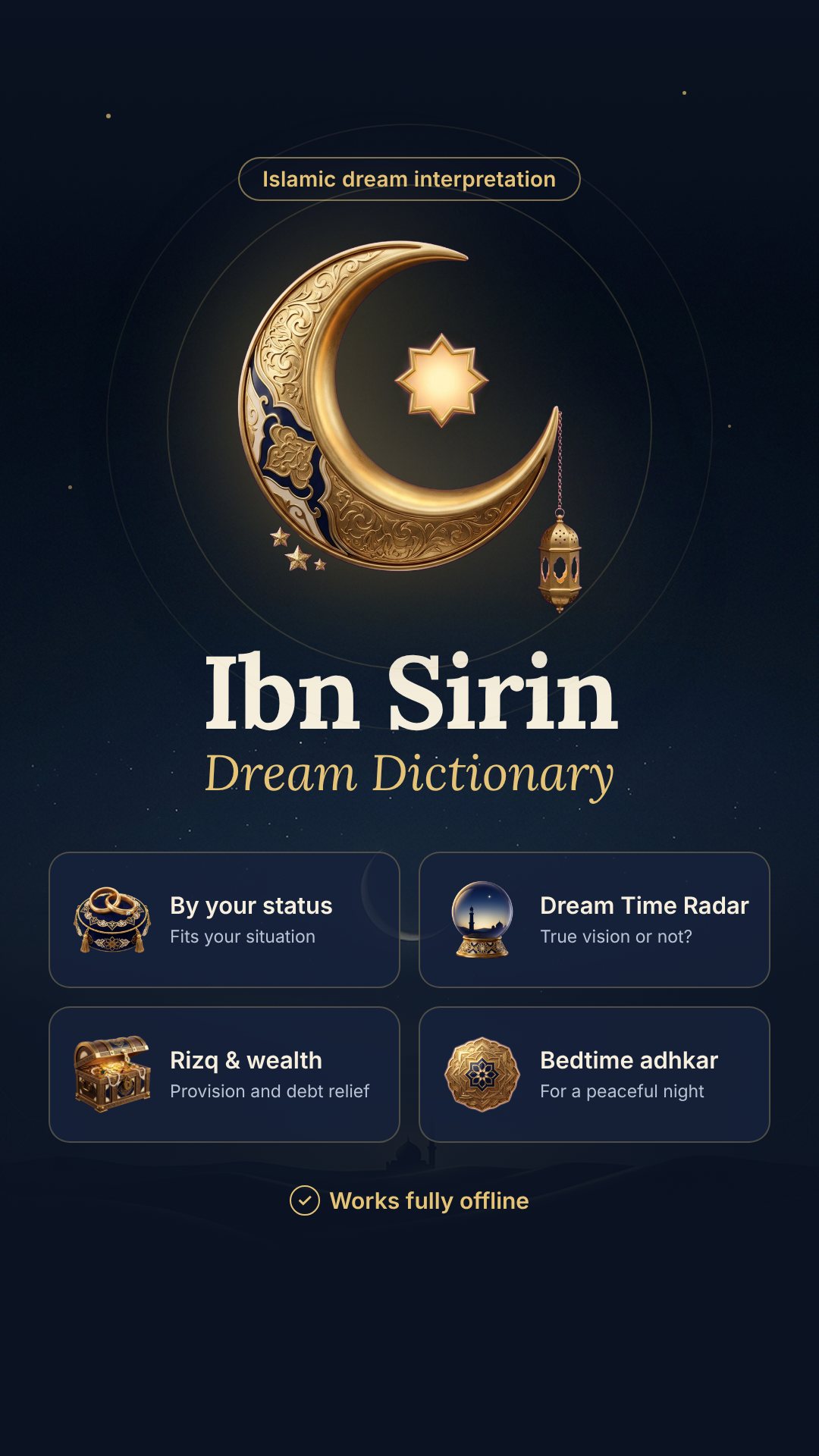
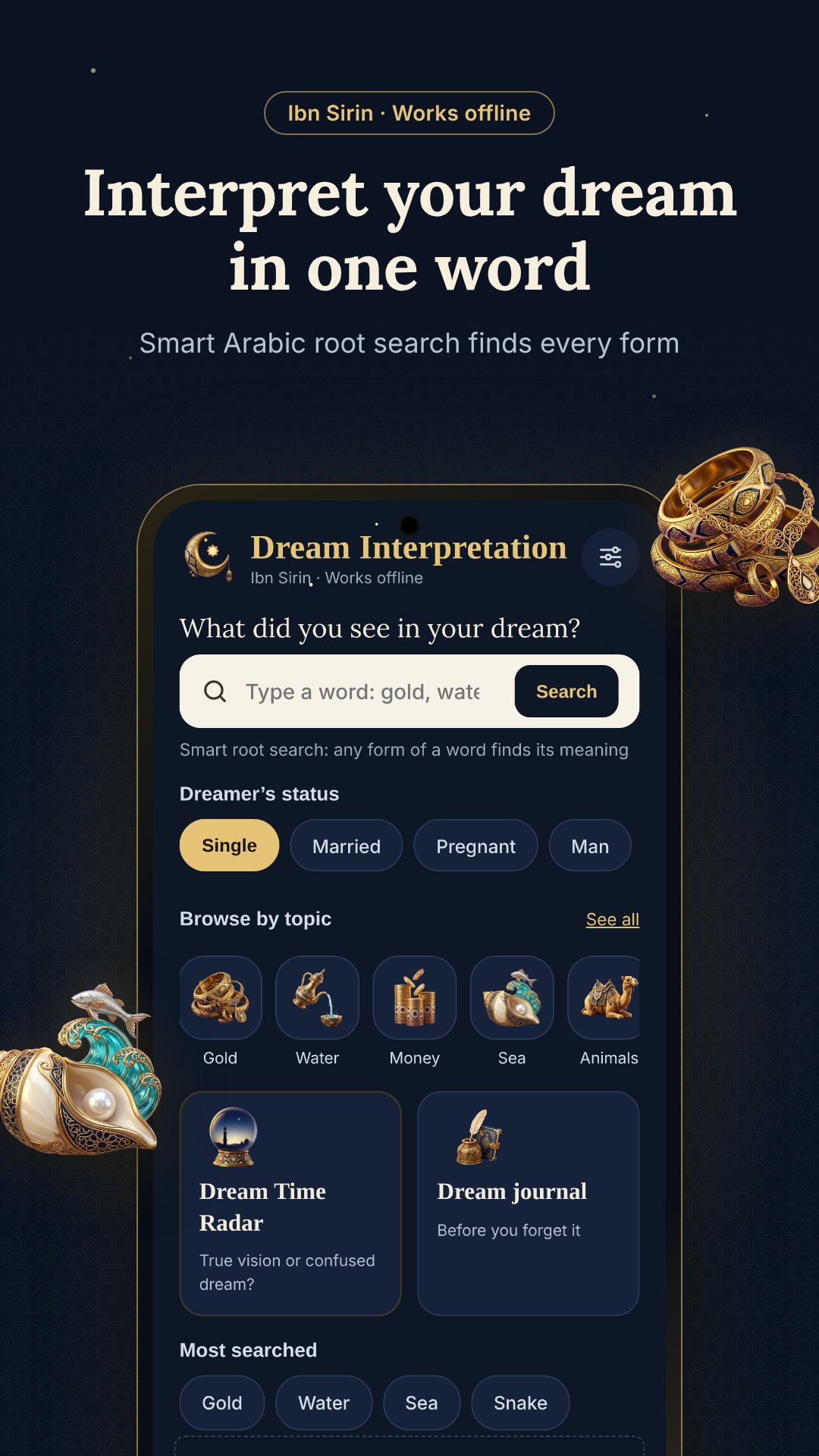
The same symbol does not mean the same thing to everyone, and the classical books say so. Each entry gives a separate interpretation for four cases — an unmarried woman, a married woman, a pregnant woman and a man — so the reading you see is written for your situation. Gold, for example, is adornment and glad tidings for a woman but is read with caution for a man. Below the main reading, a dedicated provision (rizq) note draws out what the symbol says about livelihood, and a Related dreams row links to the entries the classics mention alongside it.
Classical scholars held that the hour you dream matters. The vision radar asks when you woke and sorts the time into six slots across the night; waking in the pre-dawn hours — السحر, from 03:00 to 06:59, before Fajr — is read as a true vision (رؤيا صادقة), while other hours lean toward a jumbled dream or the whisperings of the self. It is a gentle, traditional lens, not a verdict, and it gives your reading a frame the dictionary alone cannot.
Ibn Sirin Dreams presents classical Islamic dream interpretation for cultural, educational and reference use; it is a dictionary, not a fatwa, and it does not replace scholarly or professional advice. The bedtime adhkar carry their hadith references, the first few are free, and the rest unlock with a rewarded ad or the premium purchase. The app contains ads, runs fully offline, and keeps your journal and saved dreams on your own device.
Yes. All 96 interpretations, the search and the vision radar run on your device, with no account and no connection required.
You enter the hour you woke; waking in the pre-dawn hours, from 03:00 to 06:59, is read as a true vision, while other hours lean toward a jumbled dream.
Yes. Each entry gives a separate reading for an unmarried woman, a married woman, a pregnant woman and a man.
Yes, it is free with ads, and offers an optional premium purchase that removes ads and unlocks all of the bedtime adhkar.